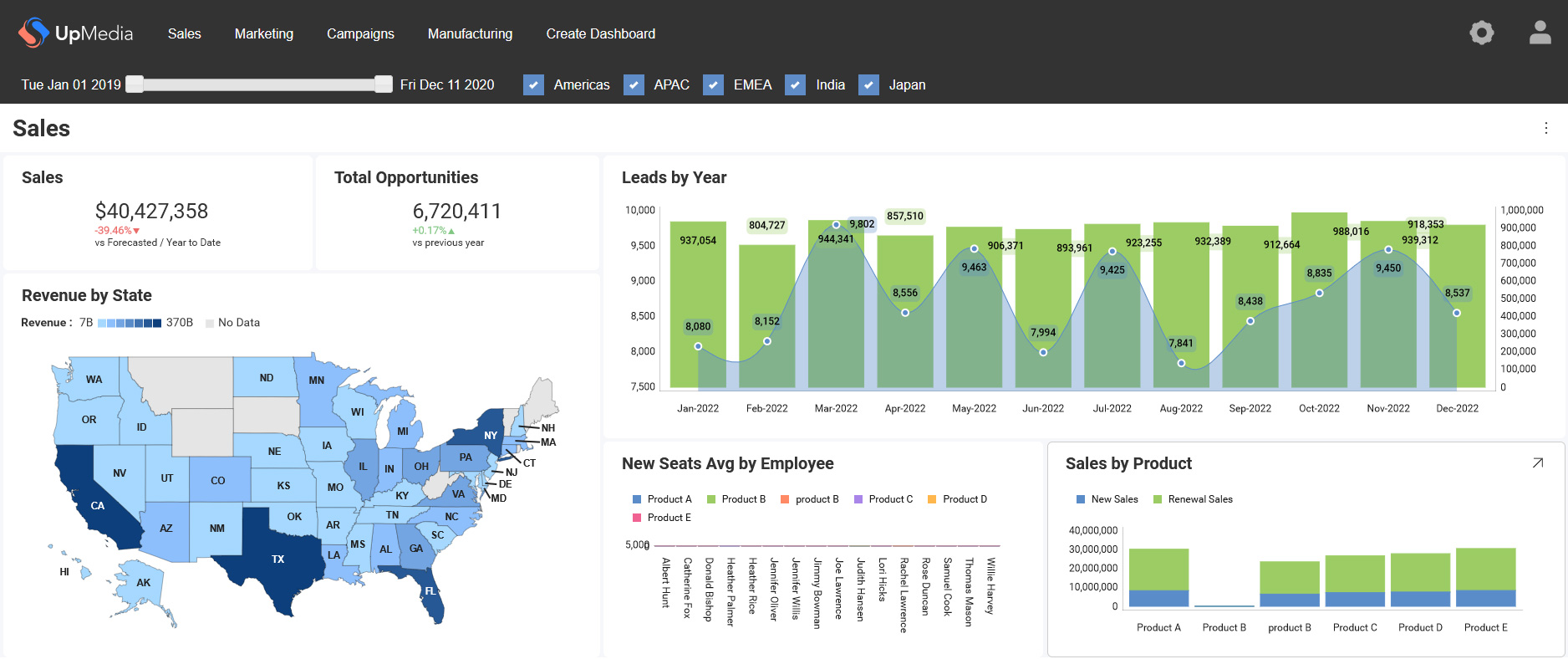



What Is Analytics as a Service?
Analytics as a service (AaaS) delivers analytics capabilities as a managed layer inside software products. It removes the need to build and operate analytics infrastructure in-house. Instead of centralized enterprise BI tools, product teams expose insights directly to users. The model builds on business analytics concepts while aligning analytics delivery with modern SaaS architectures.
How Analytics as a Service Works

Analytics as a service starts when a product connects its operational data to a managed analytics layer. Teams map databases, warehouses, or application data through supported data sources. The provider handles connectivity, scaling, and the runtime that serves queries, so product teams don’t have to set up separate infrastructure for analytics delivery.
Next comes the processing and modeling layer. The service runs scheduled refreshes or near real-time queries, depending on the setup. It applies security rules and filters so that each user sees only what they should. This matters most in SaaS products that need tenant isolation and consistent permissioning across customers.
The product surface is delivered through APIs and an embedded SDK. Developers use these components to render dashboards, charts, and interactive controls inside the app. They can also drive behavior through code, like pre-filtering by account, enforcing role access, or linking dashboards to workflows. This is a common pattern in modern embedded analytics platforms built for customer-facing use.
Because the service owns the analytics runtime, it also owns ongoing maintenance. That includes upgrades, performance tuning, and feature rollout. Your team focuses on product integration and user experience, not BI operations. This shift sets up the key comparison with traditional analytics deployments.
Analytics as a Service vs Traditional Analytics
Traditional analytics grew around internal reporting needs. Teams deployed tools, managed infrastructure, and controlled access centrally. That model works for internal users but creates friction when analytics must live inside a product. Analytics as a service shifts runtime ownership away from the product team while retaining control over how insights appear to users.
Here is a practical comparison between analytics as a service and traditional business intelligence deployments.

In traditional setups, analytics often lives outside the product. Users leave their primary application, request reports, or export data. That gap reflects the shift described in legacy vs. modern embedded analytics, where analytics moves closer to daily workflows.
Analytics as a service removes this separation. It supports product-native delivery while avoiding the overhead of running a BI platform. The next question is how this delivery model relates to embedded analytics inside SaaS products.
Analytics as a Service vs Embedded Analytics
These two terms often get used together, but they describe different things. Analytics as a service defines how analytics is delivered and operated. Embedded analytics refers to how analytics appear inside a product interface. One is a delivery model. The other is an implementation approach.
Analytics as a service handles infrastructure, scaling, and maintenance behind the scenes. Embedded analytics focuses on placing dashboards and insights directly into user workflows. Many SaaS teams combine both by using an analytics service to power in-product experiences. This approach lets teams ship analytics faster without owning a full BI stack.
In practice, embedded experiences are delivered through an analytics service that supports product integration. This pattern is common across modern SaaS products that rely on embedded analytics for customer-facing use. It is evident in products built by embedded analytics for SaaS companies, where analytics must feel native and contextual.
Understanding this distinction makes the next concern more concrete. If analytics runs as a service, where does it run, and how does deployment affect security and control?
Deployment Models for Analytics as a Service
Where analytics runs matters as much as what it does; deployment models define how data moves, where processing happens, and who controls access. For SaaS teams, these choices affect security posture, compliance scope, and customer trust. Analytics-as-a-service supports several deployment paths, each with trade-offs.
Some platforms run analytics entirely in vendor-managed environments. Others support customer-managed cloud deployments or fully on-premises setups. These options determine how data is stored, processed, and isolated. Security requirements often drive this decision, especially in regulated industries with strict data residency rules. These concerns are commonly addressed under broader security policies.
A common approach is to run analytics inside the customer environment while still consuming it as a service. Reveal is an example of this model. It supports private and on-premises deployments where analytics runs alongside application data. Data does not move to third-party systems, which simplifies audits and reduces exposure. This approach aligns with practices outlined in security with embedded analytics and reinforced by platform privacy policy commitments.
Once deployment boundaries are defined, another challenge emerges. How does analytics as a service evolve when AI enters the picture, and what changes when models interact with live data?
Analytics as a Service in the Era of Generative AI
Generative AI changes how users interact with analytics, but it increases risk when data leaves controlled environments. In analytics as a service, AI should assist exploration without owning execution. The analytics layer must still enforce permissions, filters, and data boundaries. This separation protects customer data while enabling faster insight.
Many teams explore generative AI analytics to reduce friction for end users. Problems arise when AI tools send data or queries to external models. That pattern undermines governance and exposes the system, especially in multi-tenant SaaS products. The risk increases when AI interacts with live production data.
A safer approach keeps AI inside the analytics workflow. Reveal follows this model. AI features run within the customer environment and respect existing security rules. The system does not generate raw SQL or bypass access controls. Instead, it produces governed analytics actions, like dashboard definitions, that flow through the same permission model. This aligns with private AI analytics architectures and avoids the third-party data-handling risks described in AI-powered analytics.
When AI operates this way, teams gain usability without compromising control. With security and AI risks addressed, it becomes easier to focus on the concrete advantages of analytics as a service.
Advantages of Analytics as a Service
Once analytics delivery is abstracted into a service, the benefits become practical and measurable. Product teams spend less time operating analytics and more time improving the product. The value shows up in speed, cost control, and flexibility.

The main advantages include:
-
Faster implementation
Analytics integrates via APIs and SDKs, helping teams reduce time-to-market.
-
Lower infrastructure and maintenance cost
The provider manages servers, upgrades, and performance tuning.
-
Scalability on demand
Analytics usage grows with the product, supporting scalable analytics without capacity planning.
-
Reduced analytics engineering overhead
Teams avoid building and maintaining custom BI pipelines.
-
Faster iteration for product teams
Dashboards, workflows, and AI features evolve without re-architecting systems.
These advantages explain why analytics as a service often appears in customer-facing products. The next step is understanding where teams apply it in practice.
Common Use Cases for Analytics as a Service
Analytics as a service shows its value when analytics becomes part of the product experience. Instead of serving internal teams, insights reach end users directly. This model fits products that need scale, isolation, and consistent delivery across customers.
Everyday use cases include:
-
Customer-facing dashboards in SaaS applications
Many products deliver insights through customer-facing analytics embedded in the user interface.
-
Usage and product analytics
Teams track feature adoption, engagement, and behavior without separate reporting tools.
-
Operational analytics for customers
Users monitor performance, workflows, or outcomes relevant to their daily work.
-
Multi-tenant analytics for ISVs
Analytics serves many customers from a shared platform while enforcing strict isolation, a pattern typical in ISV analytics.
-
White-label analytics experiences
Products maintain visual and brand consistency through white-label analytics.
As these use cases scale, new challenges appear around data isolation, customization, and governance. Those trade-offs deserve closer attention next.
Challenges and Considerations
Analytics as a service simplifies delivery but introduces new constraints that product teams need to manage. These challenges appear once analytics moves into customer-facing environments. Ignoring them can create risk or limit long-term flexibility. Teams should evaluate these areas early.
Common challenges include:
-
Data security and compliance
Analytics often processes sensitive customer data. Teams must ensure access control, auditability, and compliance with internal and regulatory requirements. These concerns grow in multi-tenant and regulated environments.
-
Multi-tenant architecture complexity
Serving manycustomers from a shared analytics layer requires strict isolation. Poor design can lead to data leakage or performance issues, as outlined in the discussion on multi-tenancy data in embedded analytics.
-
Customization limits with generic BI tools
Some analytics services restrict how dashboards look or behave. This can conflict with product UX standards or branding needs.
-
Vendor lock-in risks
Tight coupling between analytics services and product logic can make future changes harder. Clear APIs and portable data models reduce this risk.
These considerations shape how teams choose platforms and architectures. They also influence how analytics as a service fits into a broader product strategy, which brings us to the final example.
Analytics as a Service and Embedded Analytics with Reveal
Choosing a platform often comes down to how well it fits your product architecture. Analytics as a service works best when it supports embedded delivery, security control, and product-level customization. The goal is to offer analytics that feel native without taking ownership of a full BI stack. This balance matters most for SaaS companies and ISVs.
Reveal is an example of an embedded analytics platform that fits into an analytics as a service model. It allows teams to consume analytics as a managed capability while running execution inside the customer environment. This approach supports private and on-premises deployments without routing data through third-party systems. Security rules, permissions, and filters stay consistent across the product.

Reveal also focuses on product integration. Analytics is embedded directly into applications via APIs and SDKs, rather than through external portals. Teams control layout, behavior, and access using platform features designed for customer-facing products. This model is commonly adopted in ISV analytics scenarios where analytics must scale across tenants.
By combining analytics as a service delivery with embedded execution, platforms like Reveal show how analytics can remain flexible, secure, and product-first. That combination explains why analytics as a service continues to gain traction in modern SaaS products.