

Scriptly Helps Pharmacies Identify Trends in Real Time with Reveal

Featured Blogs
Embedded Analytics SDK vs iframes: Which is the Better Integration Option?
While both purpose-built embedded analytics SDKs and iframes allow for the integration of data analytics capabilities in an application, they come with some key differences. In this blog we discuss these two options to determine their pros and cons so that you can decide which is best for you and your end users.
Read Now
White-Label Software and Analytics: Enhancing Your Brand
Fully branded white label dashboards offer custom personalization so that your customers can present a holistic service that is all branded to one company.
Read Now
Architectural weaknesses often appear gradually. Teams continue adding dashboards, integrations, and AI tools without restructuring the foundation. Over time, inconsistencies accumulate, and governance gaps widen. These patterns signal the need for analytics modernization rather than incremental fixes.
Common indicators include:
Many of these symptoms originate from unresolved data integration challenges. Others surface when teams reconsider whether to buy or build their analytics platform after internal complexity grows. Scaling pressures also reflect broader top challenges for embedded analytics in product environments. When these conditions persist, analytics technical debt limits AI reliability and product scalability. Addressing them requires a structured modernization approach rather than incremental optimization.
Data analytics modernization requires structured execution. Organizations must move beyond platform replacement and address architectural inconsistencies. The process focuses on consolidating business logic, standardizing metrics, and preparing systems for AI governance. Analytics modernization succeeds when governance, scalability, and integration are addressed together.
The process typically includes four stages:
Many legacy environments store calculations across dashboards, SQL queries, and application code. Some logic exists inside database procedures, as seen in discussions around stored procedures and embedded analytics. Modernization begins by identifying and documenting these definitions. This step exposes inconsistencies and prevents metric loss during migration. It also clarifies where unresolved data integration challenges affect reporting accuracy.
After extraction, teams reconcile conflicting formulas and duplicated KPIs. Standardization removes inconsistencies and reduces technical debt in analytics. Metrics receive documented definitions with ownership and version control. This stage improves traceability and prepares systems for AI reasoning. Without refactoring, AI models operate on conflicting logic and produce unreliable output.
A governed semantic layer centralizes business definitions, access policies, and role-based visibility into a single source of truth. Once it’s in place, your AI services and reporting tools work from the same definitions. No conflicts, no inconsistencies. See the Key Components section below for a full breakdown.
Once governance is established, organizations enable delivery models aligned with product architecture. An embedded SDK supports integration into applications, providing full control over layout and access logic. AI services can then operate on standardized metrics with defined boundaries. This sequence ensures AI operates within governed constraints rather than exposing uncontrolled logic. These structural elements define the foundation of a modern analytics platform.
A modern analytics platform extends beyond dashboards and visualizations. It defines how metrics are governed, how insights are delivered, and how AI operates within controlled boundaries. Analytics modernization establishes these architectural layers to reduce risk and improve scalability. Each component must support governance, integration, and multi-tenant control.
A governed semantic layer centralizes metric definitions and access policies. It ensures that calculations remain consistent across dashboards, APIs, and applications. Version control and audit logs provide traceability for regulatory environments. This structure eliminates duplicated logic and reduces technical debt in analytics. Without a governed layer, AI models and reporting tools operate on conflicting definitions.
Modern delivery models prioritize embedded analytics inside applications rather than external reporting portals. An embedded SDK enables direct integration into product workflows. This approach supports customer-facing analytics with consistent role-based visibility. Organizations often combine this with white-label analytics to maintain brand continuity and interface control. Embedded architecture improves performance and supports scalable analytics as usage increases.
AI-native capabilities operate on standardized and governed metrics. These systems provide natural language querying, summarization, and anomaly detection. Role-based access control limits what AI can retrieve or generate. Token usage monitoring prevents uncontrolled cost escalation. AI services must operate within defined boundaries to maintain compliance and accuracy.
Governance extends to regulatory enforcement and infrastructure security. Modern platforms integrate audit trails, encryption, and role-based access enforcement. Compliance requirements often include SOC 2, HIPAA, and GDPR controls. Architectural design must align with enterprise security policies and deployment standards. These controls become even more critical in multi-tenant SaaS environments, where isolation and governance must be enforced at scale.
Multi-tenant SaaS environments introduce architectural complexity that traditional reporting tools were not designed to handle. Each tenant requires strict data isolation, controlled access, and predictable performance. Analytics modernization must address these constraints at the design level. Without structural enforcement, scaling analytics across tenants increases compliance and governance risk.
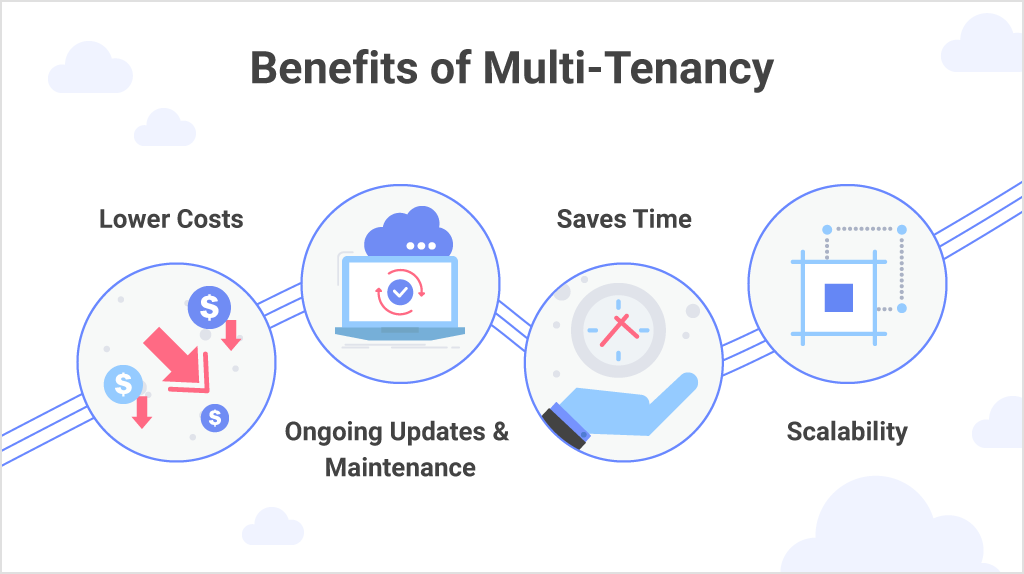
Key architectural requirements include:
Effective tenant isolation depends on managing multi-tenancy data within a governed architecture. Delivery models also matter. SaaS products rely on embedded analytics rather than external portals. Architectural approaches, such as those discussed in embedded analytics vs iframes, demonstrate how integration choices affect control and security. AI services, including AI analytics, must enforce tenant-level boundaries to prevent data leakage or cross-tenant exposure. When these safeguards are implemented at the architectural level, modernization supports both scalability and governance. These controls also define the measurable benefits organizations gain from modernization.
Architectural improvements produce measurable operational outcomes. Analytics modernization reduces structural inefficiencies and improves governance consistency. It also prepares organizations for AI adoption without increasing compliance exposure. These benefits extend across technical, operational, and business dimensions.
Despite these advantages, modernization requires careful planning and disciplined execution.
Although analytics modernization delivers clear benefits, execution introduces structural complexity. Many organizations underestimate the effort required to reconcile legacy logic and governance gaps. AI adoption increases pressure on metric consistency and access control. Without disciplined planning, modernization efforts can recreate existing risks in a new environment.
Each of these challenges reinforces the need for platforms designed to support structured modernization rather than incremental upgrades.
Most platforms bolt AI and governance on after the fact. Reveal builds them in from the start. Its architecture is designed for a full modernization stack, governed metrics, role-based access, embedded delivery, and multi-tenant isolation, without requiring you to stitch together separate tools.
Reveal’s architecture supports multi-tenant SaaS environments and controlled AI execution out of the box. If you’re mapping out your modernization approach, see how Reveal’s architecture handles it.


Back to Top

