Scriptly Helps Pharmacies Identify Trends in Real Time with Reveal

Explore the complete guide to embedded analytics, including architecture, security, AI capabilities, implementation patterns, and evaluation criteria for modern applications.
Read Now
Fully branded white label dashboards offer custom personalization so that your customers can present a holistic service that is all branded to one company.
Read Now ダッシュボードの導入に苦労していますか?ユーザーがダッシュボードを無視する理由と、組み込み分析がどのように実際の利用とより良い意思決定を促進するかを学びましょう。
Executive Summary:
プロダクトチームがダッシュボードを構築するのに苦労することはめったにありません。
彼らが苦労するのは、誰かに実際にそれを使ってもらうことです。
分析機能を提供します。データは正確です。ビジュアライゼーションもきれいに見えます。
しかし、1週間後には利用度が低下し、あなたのダッシュボードは静かに「棚の上の飾り」になってしまいます。
これはツールが問題なのではありません。利用の問題です。ダッシュボードの導入(アドプション)の問題です。
ほとんどのダッシュボードは、意思決定のためではなく、レポート作成のために設計されています。それらは別のタブに存在し、ユーザーに現在行っている作業を中断することを要求します。
そして、ユーザーがいつ、なぜそれらを確認すべきかを知っていると仮定しています。
しかし、人間はそうして仕事をするわけではありません。
ユーザーは「ダッシュボードを確認しに行こう」と考えて目覚めるわけではありません。
彼らは、ワークフロー内の何かが要求するときに行動します。分析機能がそのワークフローの一部でなければ、使われません。
プロダクトチーム全体で、パターンは一貫しています。
なぜでしょうか?
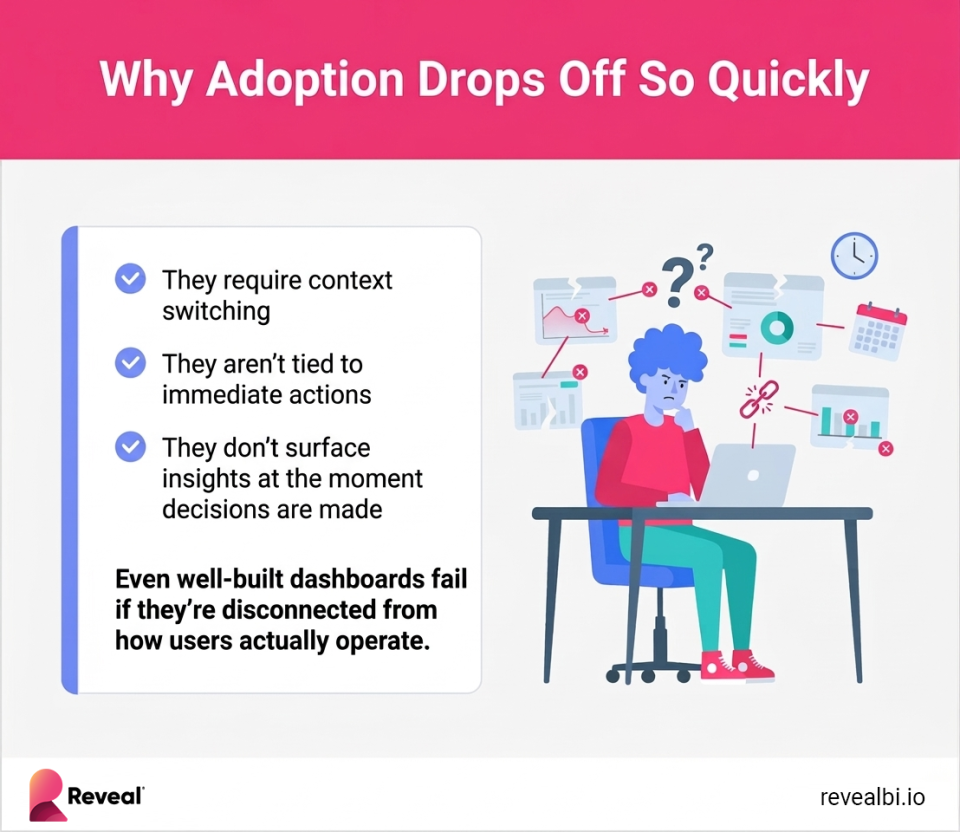
なぜなら、ダッシュボードは摩擦を生むからです。
ユーザーが実際にどのように操作しているかから切り離されている場合、どれほどよく構築されたダッシュボードであっても失敗します。
実際の分析利用が見られる製品は、ダッシュボードを目的地として扱いません。
彼らは分析機能(analytics)を製品体験の一部として扱います。
これは次のことを意味します。
これは、「データがここにあります」というものからの移行です。
「次に何をすべきか」というものです。
目標が導入(アドプション)である場合、問われるべき質問は次のものではありません。
「ダッシュボードはありますか?」
それは次のものです。
「ユーザーは実際にデータを使って意思決定をしていますか?」
これには、分析機能がどのように提供されるかを再考することが必要です。
チームが分析機能にAIを重ねていくにつれて、この移行はさらに重要になっています。
なぜなら、AIは使われていないダッシュボードを直すわけではなく、そもそも利用がない場合、その問題を増幅させるからです。
もしユーザーが今日、あなたのデータと関わっていないなら、AIを追加しても何も変わりません。
しかし、ワークフローにインサイトを組み込むことで、状況は変わります。
ユーザーが実際に使用する分析機能の設計
ウェビナーに参加して、分析機能をワークフローに組み込み、実際の導入を促進する方法を学びましょう。
 Return to Blog


 ChatGPT
 Perplexity