Scriptly Helps Pharmacies Identify Trends in Real Time with Reveal

Explore the complete guide to embedded analytics, including architecture, security, AI capabilities, implementation patterns, and evaluation criteria for modern applications.
Read Now
Fully branded white label dashboards offer custom personalization so that your customers can present a holistic service that is all branded to one company.
Read Now 대시보드 채택에 어려움을 겪고 계신가요? 사용자들이 대시보드를 무시하는 이유와 임베디드 분석이 어떻게 실제 사용과 더 나은 의사결정을 이끌어내는지 알아보세요.
Executive Summary:
제품 팀은 대시보드를 만드는 데 어려움을 겪는 경우는 드뭅니다.
그들은 누군가 실제로 그것을 사용하도록 만드는 데 어려움을 겪습니다.
분석 기능을 배포합니다. 데이터는 정확합니다. 시각화는 보기 좋습니다.
하지만 일주일 후, 사용량이 떨어지고, 대시보드는 조용히 서랍 속의 물건(shelfware)이 됩니다.
이것은 도구의 문제가 아닙니다. 사용의 문제입니다. 대시보드 채택 문제입니다.
대부분의 대시보드는 의사 결정을 위한 것이 아니라 보고를 위해 설계되었습니다. 이들은 별도의 탭에 존재하며, 사용자가 하던 일을 멈추도록 요구합니다.
그리고 사용자가 언제, 왜 확인해야 하는지 알고 있다고 가정합니다.
하지만 사람들은 그렇게 일하지 않습니다.
사용자는 다음과 같이 생각하며 일어나지 않습니다:
“대시보드를 확인하러 가야지.”
그들은 워크플로우의 무언가가 필요로 할 때 행동합니다. 분석이 그 워크플로우의 일부가 아니라면, 사용되지 않습니다.
제품 팀 전반에 걸쳐 패턴은 일관적입니다:
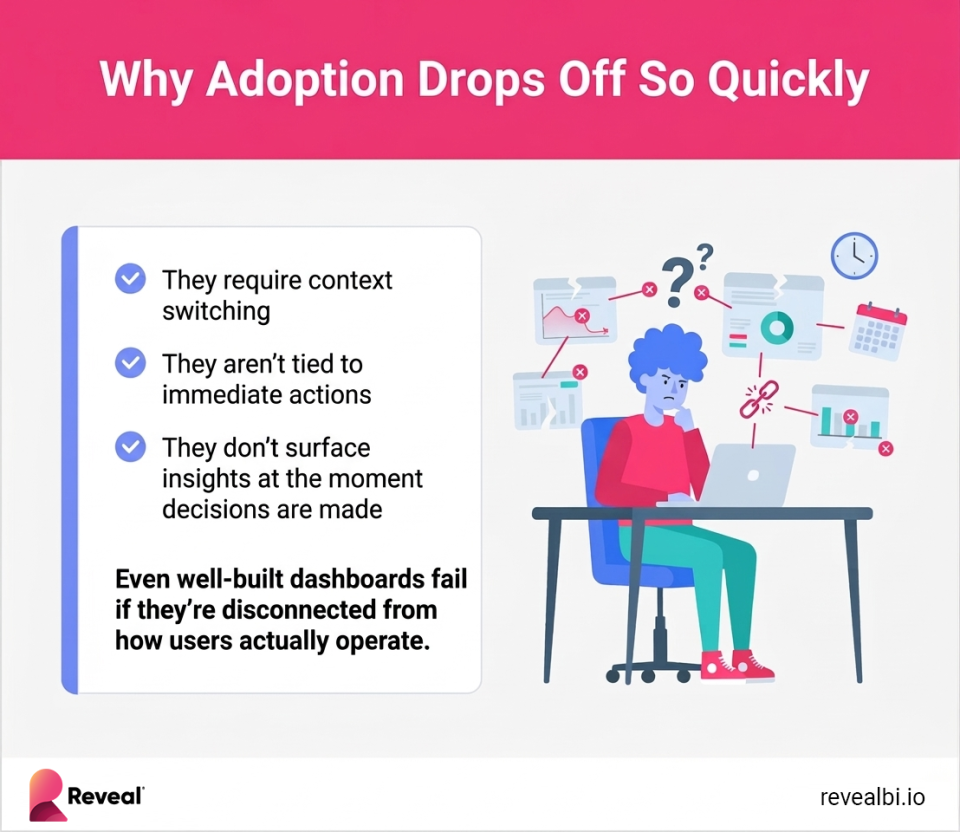
왜일까요?
대시보드는 마찰을 일으키기 때문입니다:
잘 만들어진 대시보드조차도 사용자가 실제로 작동하는 방식과 연결되어 있지 않으면 실패합니다.
실제 분석 사용량을 보이는 제품들은 대시보드를 목적지로 취급하지 않습니다.
그들은 분석을 제품 경험의 일부로 취급합니다.
이것은 다음을 의미합니다:
이것은 다음의 변화입니다: “여기에 데이터가 있습니다”
“다음으로 무엇을 해야 하는지 알려드립니다”
목표가 채택이라면, 질문은 다음과 같지 않습니다:
“대시보드가 있습니까?”
그것은 다음과 같습니다:
“사용자들이 실제로 데이터를 사용하여 의사 결정을 하고 있습니까?”
이를 위해서는 분석이 제공되는 방식을 재고해야 합니다:
팀들이 분석에 AI를 추가함에 따라 이 변화는 더욱 중요해지고 있습니다.
AI는 사용되지 않는 대시보드를 고치지 못하기 때문에, 애초에 사용량이 없다면 문제를 증폭시킬 뿐입니다.
사용자들이 오늘날 귀하의 데이터와 상호 작용하지 않는다면, AI를 추가해도 변하지 않을 것입니다.
하지만 워크플로우에 통찰력을 임베딩하면 달라질 것입니다.
사용자가 실제로 사용하는 분석을 설계하세요
웨비나에 참여하여 분석을 워크플로우에 임베딩하고 실제 채택률을 높이는 방법을 알아보세요.


 Return to Blog


 ChatGPT
 Perplexity